


HAU1 Hebbel am Ufer
Stresemannstraße 29, 10963 Berlin
Using the law. For a world free from torture, exploitation and fortressed borders.

ECCHR is an independent, non-profit legal and educational organization dedicated to enforcing civil and human rights worldwide. It was founded in 2007 by Wolfgang Kaleck and other international human rights lawyers to protect and enforce the rights guaranteed by the Universal Declaration of Human Rights, as well as other human rights declarations and national constitutions, through legal means. Together with our global network, we enforce human rights and make injustice visible. In court and society.
Current cases
 © ECCHR
Historic debate in the German Bundestag
The debate in the German Federal Parliament (Bundestag) on the full recognition of the genocides against the Ovaherero and Nama marked a historic day for the descendants of the victims. A motion tabled by the parliamentary group The Left (Die Linke), developed in close cooperation with representatives of the Ovaherero and Nama, once again brought the descendants’ demands for recognition, an apology, and reparations to the forefront of parliamentary debate.
 © Wikimedia Creative Common
Trump attacks the International Criminal Court – States must protect it now
The US government imposed sanctions on the International Criminal Court (ICC). This draconian measure is part of growing repression against the Court and human rights organizations, and thus constitutes an attack on universal criminal justice. ECCHR joined more than 120 NGOs in calling for states to protect and defend the ICC.
Despite international warnings: Billions in arms exports to Israel
From 2023 to 2026, Germany continuously exports arms worth billions to Israel. The latest ECCHR report shows that Germany's approval figures contradict its own defense before the International Court of Justice.
 © Clara Marnette
Detention crimes in Libya finally before the ICC: Judges send case to trial
The International Criminal Court has confirmed all 17 charges against Khaled Mohamed Ali El Hishri. It marks a historic breakthrough for survivors of crimes committed at Mitiga Prison and for accountability in Libya.
 © Global Initiative Against Impunity
Day of International Criminal Justice
On the Day of International Criminal Justice, the Global Initiative Against Impunity highlights its impact: supporting more than 2,000 survivors across 28 country situations and demonstrating what civil society can achieve when survivors are placed at the centre.
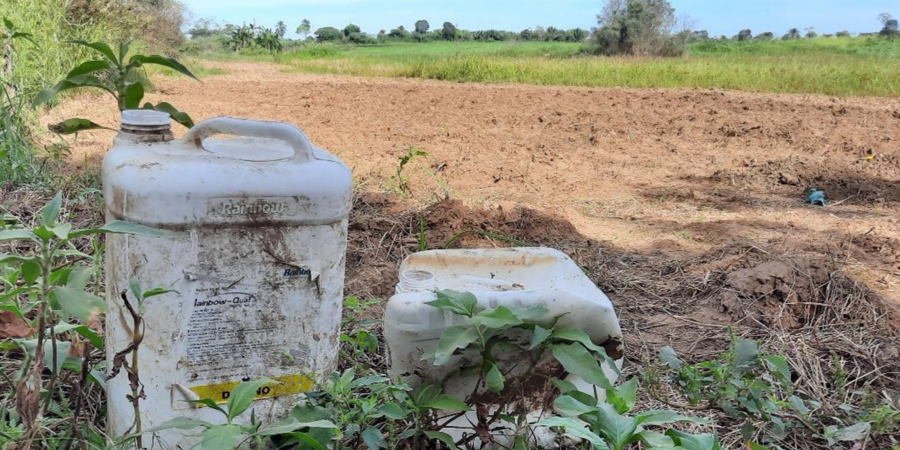
German authorities turn a blind eye as Bayer escapes accountability
Civil society organizations fighting the human rights and environmental toll of Bayer's pesticide and GMO soy operations in South America have rejected a mediation offer by Germany's OECD National Contact Point after it dismissed core claims in their complaint. A flawed process, a predictable outcome: greenwashing instead of justice.
Together with those affected and partners worldwide, ECCHR uses legal means to end impunity for those responsible for torture, war crimes, sexual and gender-based violence, corporate exploitation and fortressed borders.
Donate for justice
Institute for Legal Intervention

Critical Legal Training
At ECCHR, we look to a growing network to share and develop our motivation, knowledge and innovative approaches to conducting human rights work. With this in mind, ECCHR’s Critical Legal Training focuses on training, networking and collaborative learning. To ensure the future of progressive human rights work, we take part in an ongoing learning process together with young lawyers and our international colleagues.

International Summer School on Corporate Accountability & Climate Justice
Together with the Friedrich-Alexander Universität Erlangen-Nürnberg (FAU) and Tilburg Law School, ECCHR organizes an international summer school for human rights practitioners and advanced students on the topic of Corporate Accountability & Climate Justice.

Investigative Commons reinvents legal investigations
To expand the production of (forensic) evidence to actors beyond state-appointed experts and to use forums other than courts for accountability, we co-founded the Investigative Commons in 2020 together with long-time partner Forensic Architecture and their German sister agency Forensis.
The Institute for Legal Intervention focuses on critical perspectives on the law, particularly concerning power and power dynamics. We aim to make a long-term contribution to societal, legal and political debates through exchange with universities and research institutions, through our training and co-learning activities, through collaboration with our partners worldwide as well as in dialogue with artists and activists.
Events
5 November 2026, 7:00 pm, Berlin
On Justice #11: Memory, Responsibility, Justice: From the Nuremberg Trials to The Hague
ECCHR in the media
Landmark ICC trial on Libya migrant abuses must lead to more scrutiny of EU complicity
The Ceuta 'crisis' is the cost of deadly EU policies
Libyan commander at the ICC: The "angel of death" on trial
‘I survived Assad’s torture — now I’m facing his men in court’
A Stunning New Verdict Rewrites the Rules of Corporate Morality
Law Professor Chantal Meloni on the limitations, future, and remaining utopian potential of international law
Why Pakistani farmers are suing two German companies for deadly 2022 floods
Belgian court clears way for trial over 1961 killing of Congo PM Lumumba
Germany never stopped arming Israel’s genocide
Let’s stay in touch
Want to stay up to date on our cases, events and publications? Subscribe to our newsletter.
Publications

Grey zones, red lines: defending academic freedom in law and politics
Abgesagte Veranstaltungen, Ausladungen renommierter Academic freedom is under attack. Cancelled events, disinvited scholars, police dispersal of student protests, and growing self-censorship are no longer exceptions – they are becoming the norm. This report analyses how migrant scholars have experienced the emerging grey zones, the nature of the restrictions and the legal instruments that scholars can use to defend their freedom.

A Palestinian from Gaza seeks justice in Germany's top court
Abdel J., a Palestinian from Gaza, has lost everything he loved: his wife and child were killed in an Israeli airstrike in 2024. Now he is taking legal action against Germany’s exports of weapons of war and arms shipments to Israel which continue to be used in Gaza, even after the current fragile ceasefire.
Would you like to receive regular updates on our case work on Israel and Palestine in the coming months? Subscribe to our special newsletter here.

The Pretense of Justice
With its report The Pretense of Justice, ECCHR presents an analysis of the Israeli justice system’s persistent unwillingness to genuinely prosecute international crimes committed against Palestinians. The report demonstrates that Israel’s self-portrayal as a “rule of law-abiding state” is untenable.
In order to sustainably change the law, a transformation of social power relations is needed – and new laws have to be created. This is why ECCHR initiates and participates in legal and law-related policy debates, organizes public events and publishes on selected topics.
15 Years of Engagement

The existence of human rights is not a foregone conclusion – rather, they must be defended and fought for again and again. The challenges of legal human rights work demand perseverance and have been our central focus since ECCHR’s foundation in 2007. Read our multimedia article “Fighting for 15 years to uphold human rights worldwide.”
