

Definition
Due diligence
A company's s human rights due diligence obligations reguire it to manage potential risks to human rights.
Show MoreBrazilian agribusinesses are violently grabbing the land of traditional peasants of the Capão do Modesto territory in Brazil’s Cerrado and designating it as environmental compensation areas for their soy farms. The local "Fundo e Fecho de Pasto" communities depend on this communal land to secure their livelihoods. For generations, they have grazed their cattle and practiced subsistence farming there. Today, large parts of their ancestral territory are blocked off by fences and armed guards, while the native Cerrado vegetation is being deforested and its water sources depleted.
Much of the soy produced in the Brazilian Cerrado is exported to the European market as animal feed for the factory farming industry. Under the German Supply Chain Act (LkSG), German companies must assume responsibility for human rights violations in their supply chains. Thus, in November 2026, residents of the Capão do Modesto territory filed a complaint under the LkSG, accusing the German meat processing companies Premium Food Group (formerly: Tönnies) and Rothkötter of failing to act against “green land grabbing” practices in their supply chains.
In November 2026, the association representing the residents of the territory of Capão do Modesto (Associação Comunitária de Preservação Ambiental dos Pequenos Criadores do Fecho de Capão do Modesto) and three of its members submitted a complaint under the German Supply Chain Act (LkSG) to the Federal Office for Economic Affairs and Export Control (BAFA). The complaint is directed against the German meat processing companies Premium Food Group (formerly: Tönnies) and Rothkötter. In addition to ECCHR, the complainants are also supported by Deutsche Umwelthilfe (DUH), the Instituto Sociedade, População e Natureza (ISPN), the Comissão Pastoral da Terra (CPT), the Associação de Advogados/as de Trabalhadores/as Rurais (AATR) and Earthsight.
At the core of the complaint are practices of so-called “green land grabbing” (Portuguese: grilagem verde), that is, the appropriation of land under the pretext of environmental conservation. Brazilian agribusinesses like SLC Agrícola and Grupo Horita are violently grabbing large parts of the communal territory of Capão do Modesto and designating them as environmental compensation areas (“Legal Reserves”) for their soy farms in official land registers. Such compensation areas are a legal requirement under Brazil's Forest Code to "offset" the environmental damage of agricultural land use. In practice, however, they often lead to land grabbing elsewhere instead of ecological protection on the agribusinesses' own land. The "Legal Reserves" are fenced off, with blockades erected and armed guards attacking community members and their animals when they try to access their ancestral territory. The complainants constantly fear for their lives, while increasingly losing access to their means of subsistence. Many have already had to leave their communal land and move to the cities.
The agribusinesses' soy farms, in turn, are often located far away – in this case 100 and 150 km, respectively – on more arable land. This land, too, has often previously been stolen from local communities. To make this industrial soy farming possible, native Cerrado vegetation is being deforested and its water sources depleted. This further threatens the livelihoods of the local communities who depend on these natural resources for their survival.
Much of the soy produced by Brazilian agribusinesses is exported to Europe as animal feed and thereby enters the supply chains of German meat processing companies. For SLC Agrícola and Grupo Horita as well, there is strong evidence indicating that their soy, via the international trader Bunge, ultimately feeds the pigs and chickens sold by Premium Food Group (formerly: Tönnies) and Rothkötter. The complainants are accusing the two German meat processors of having taken no measures, or at least no effective measures, against the "green land grabbing" practices of their presumed indirect suppliers, despite having had substantiated knowledge of these practices since at least 2024. The complainants demand that Premium Food Group (formerly: Tönnies) and Rothkötter make their supply chains transparent and use their leverage to insist upon the return of the unlawfully occupied land.
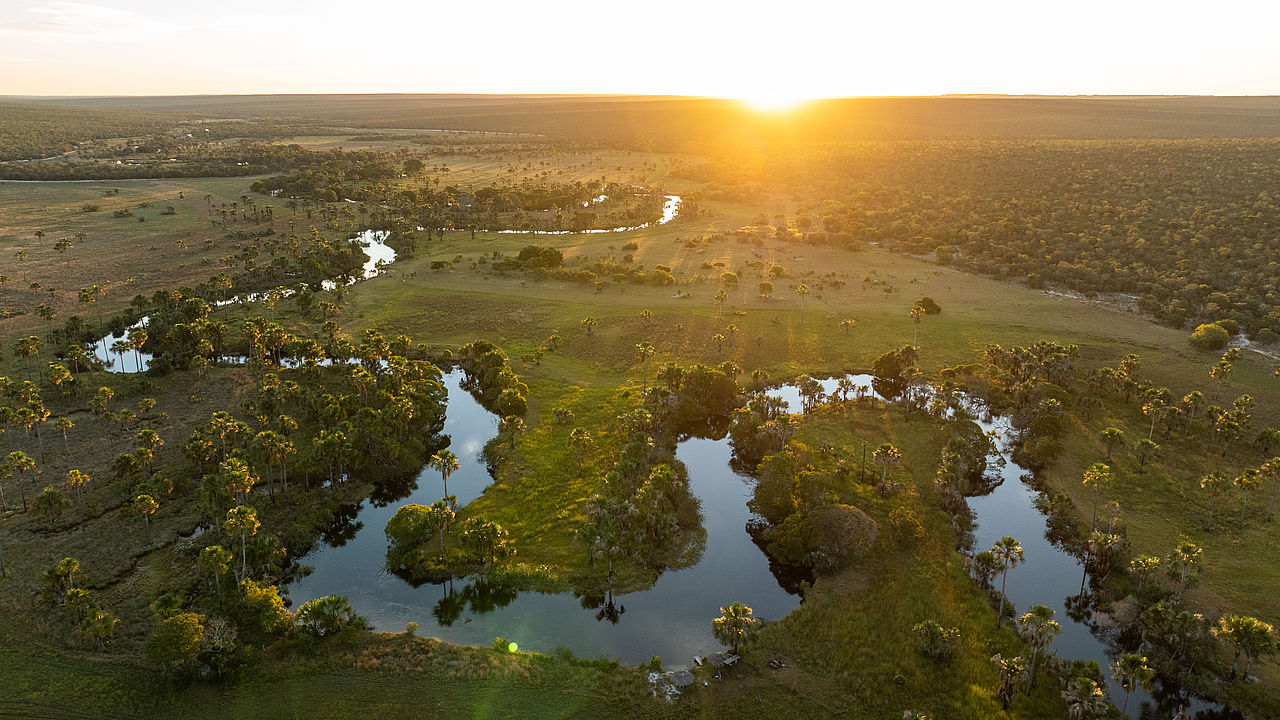
The Cerrado is Brazil’s second-largest biome after the Amazon rainforest and is one of the most species-rich savannahs in the world. Because its deep-rooted vegetation replenishes the water in important aquifers, as well as the headwaters of several of South America’s largest river basins, it is also known as the “Coração das águas” – the Heart of Water. At the same time, it is often described as a “sacrifice zone” for the expansion of agribusiness: around 60 per cent of Brazil’s agricultural production now takes place in the Cerrado, and around half of Brazil’s deforestation in 2025 occurred there – approximately 540,614 hectares, almost twice the area cleared in the Amazon. The MATOPIBA region (Maranhão, Tocantins, Piauí, Bahia), where Capão do Modesto is located, is afflicted by particularly serious land conflicts, and most of its original vegetation has been cleared for soy and livestock.
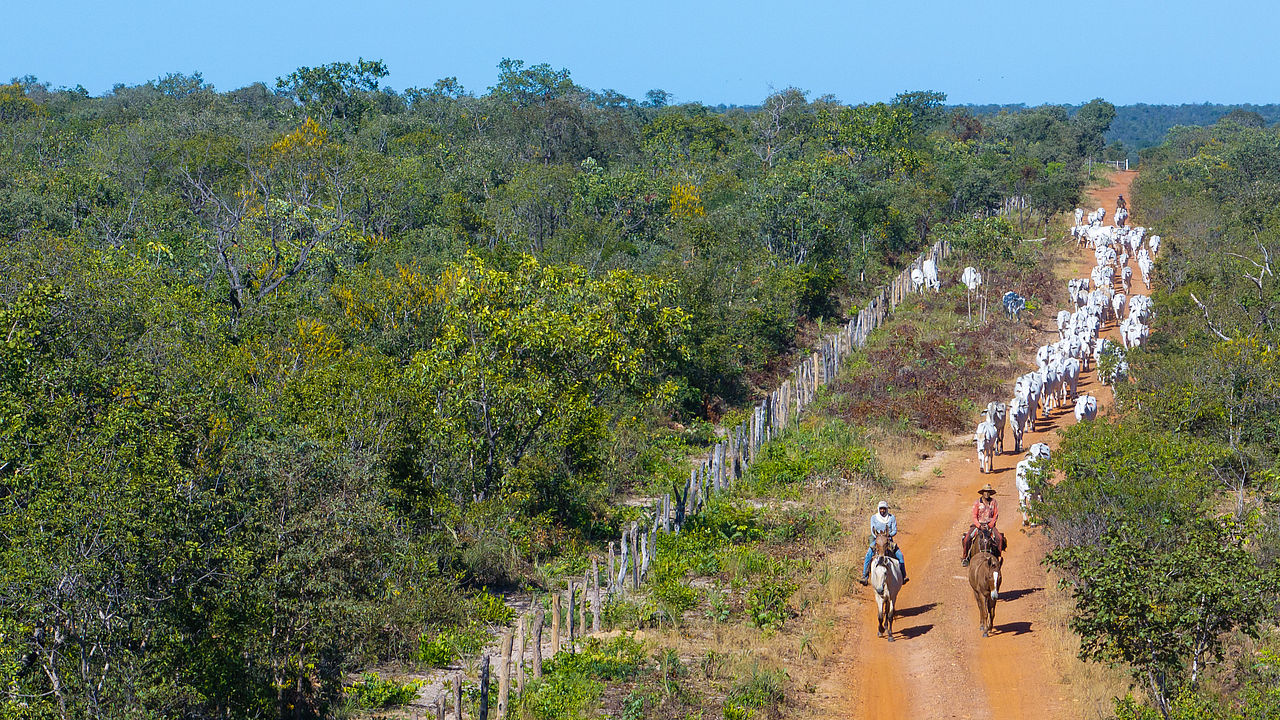
The complainants identify themselves as members of a "Fundo e Fecho de Pasto" community. "Fundo e Fecho de Pasto" communities manage their territories collectively under customary law, without individual land titles. Residents live from traditional livestock farming on extensive natural pastures, subsistence agriculture and gathering native fruits, medicinal plants and firewood. This “commons” form of land use is remarkably sustainable: animal herds are spread across large areas, which prevents overgrazing and reduces the risk of forest fires.
A company's s human rights due diligence obligations reguire it to manage potential risks to human rights.
Show MoreThe UN Guiding Principles on Business and Human Rights aim to promote corporate responsibility for human rights.
Show MoreA company's s human rights due diligence obligations reguire it to manage potential risks to human rights.
Show MoreBoth in economic and legal terms, transnational corporations are the winners of the globalized economy. They are often caught up in a borad range of human rights violations, but the people running the firms are only rarely called before the courts, and even more rarely convicted for their wrongdoing.
Show MoreEconomic activities in the Global South far too often disregard the plight of people and the environment. Looking at resource exploitation, we see that the responsibility for endangering human rights and the environment lies with those who profit most from these industries in the global economy. We work with those affected by such human rights violations to enforce their rights.
Show MoreBoth in economic and legal terms, transnational corporations are the winners of the globalized economy. They are often caught up in a borad range of human rights violations, but the people running the firms are only rarely called before the courts, and even more rarely convicted for their wrongdoing.
Show More