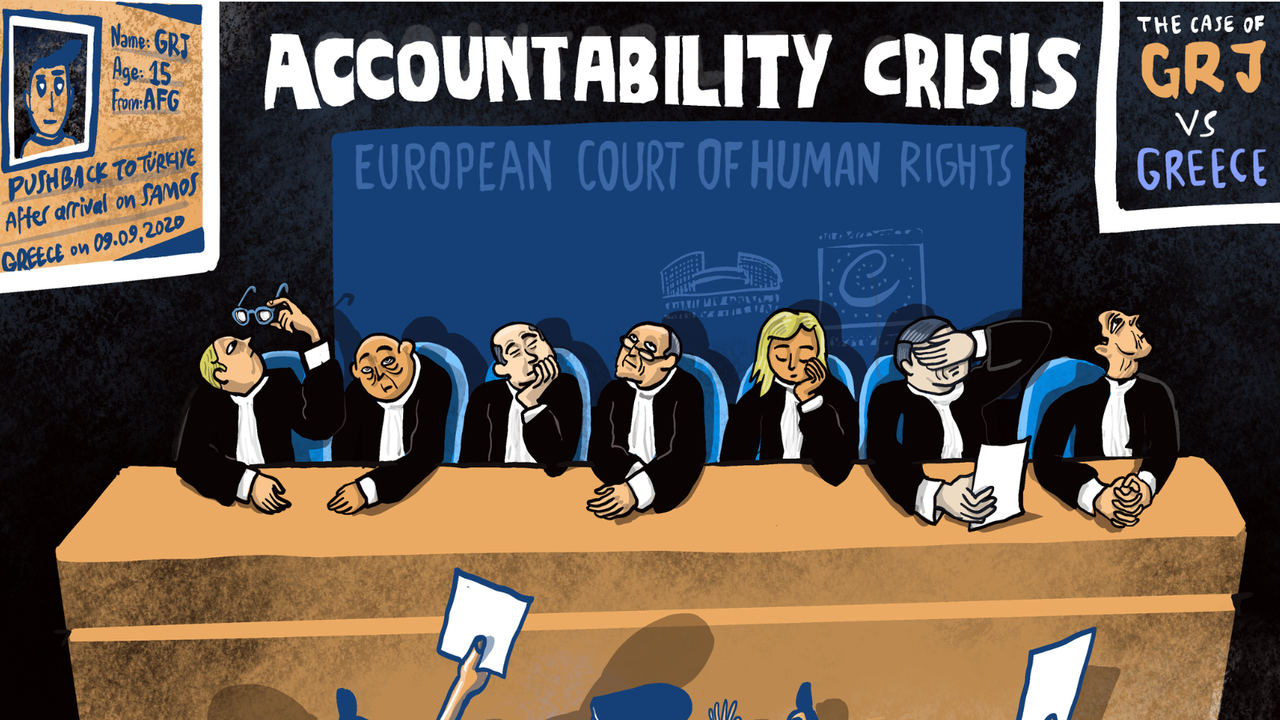
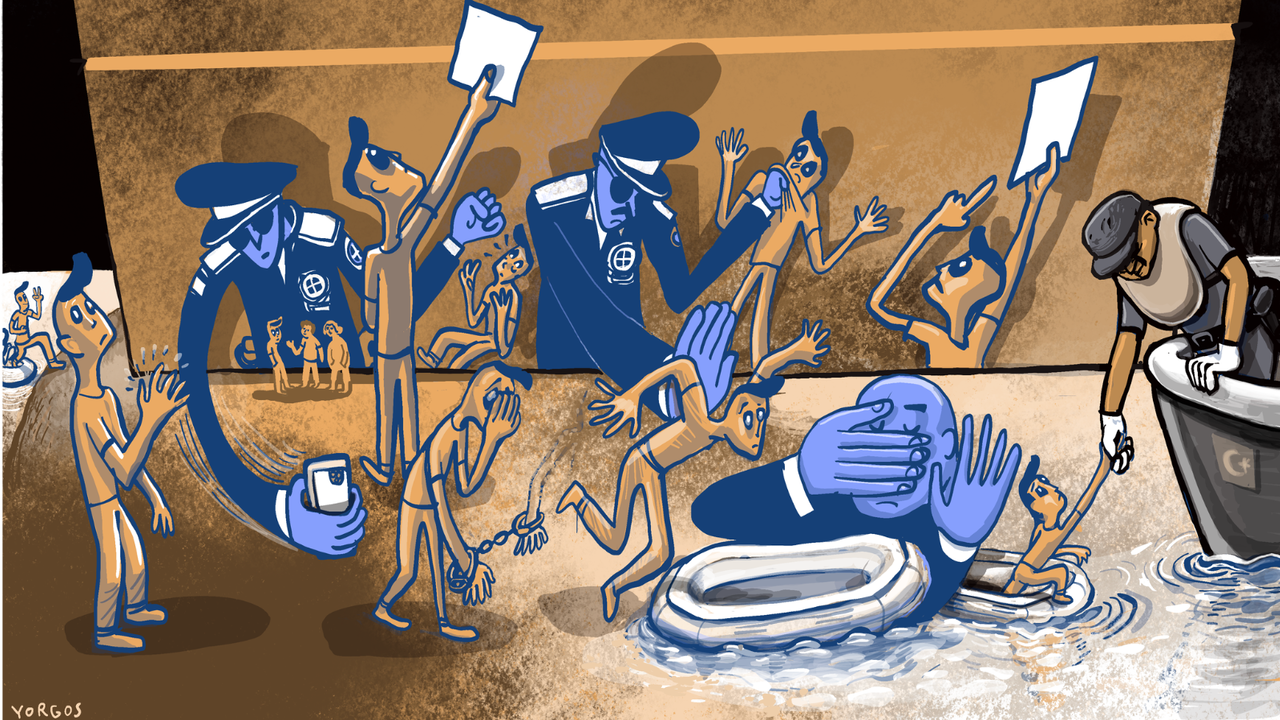
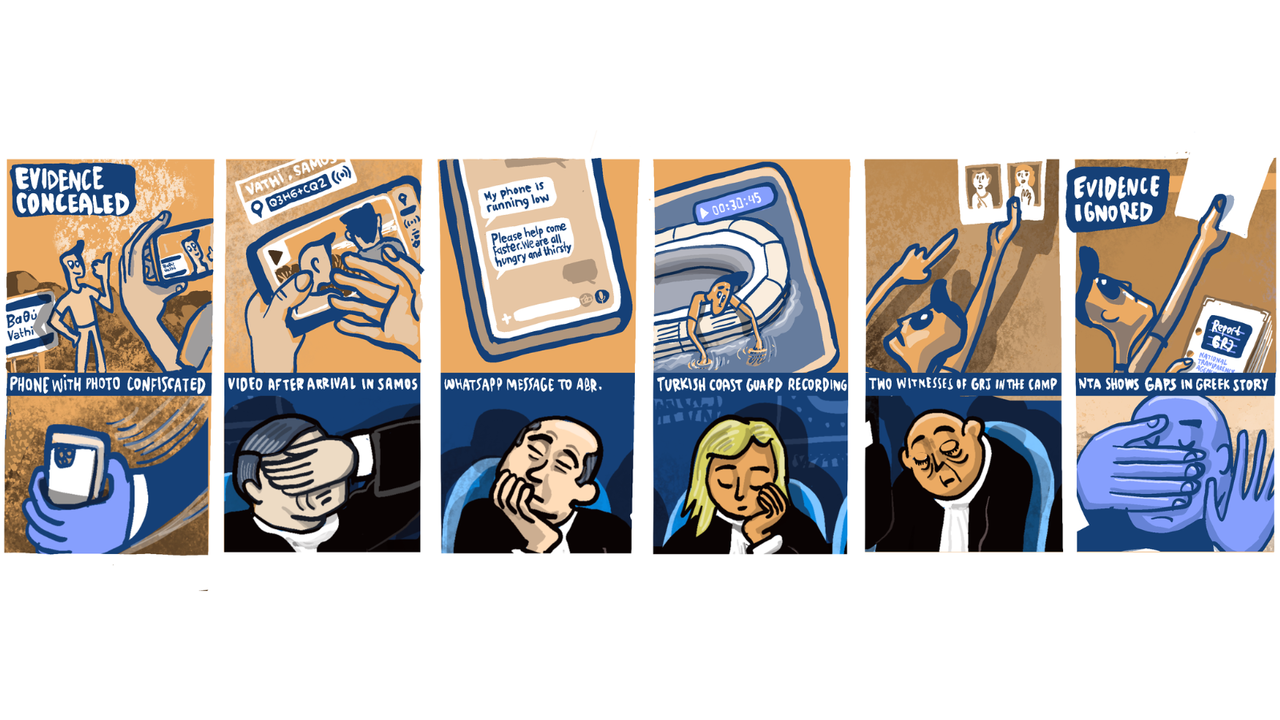
Extraordinary efforts were made by the applicant’s traveling group and civil society to preserve evidence of G.R.J.’s arrival on the Greek island of Samos and his pushback between 8-9 September 2020. The amount of evidence submitted was already well above and beyond what most pushback survivors are able to present. In particular, this evidence included:
(1) Photos and videos taken by G.R.J.’s traveling group after the group’s arrival on Samos. G.R.J. can be seen in one of these videos, which were shared with the NGO Aegean Boat Report (ABR) on 8 September. ABR, an NGO tracking arrivals and pushbacks, preserved the videos.
(2) A recording of the traveling group’s WhatsApp conversation with ABR, which also included a shared location with coordinates placing the group on Samos.
(3) Photos showing one of G.R.J.’s companion overlooking the Vathy refugee camp in Samos and an explanation that although a photo of G.R.J. was also taken in the same location, it had not been transferred from G.R.J.’s phone, which was then stolen by Greek authorities during the pushback.
(4) Video footage and photos as well as an event summary from the Turkish Coast Guard (TCG) showing the TCG’s rescue of G.R.J. and his companion from a motorless raft at sea on 9 September.
(5) An expert opinion from research agency Forensic Architecture, finding a record of a “prevention of departure” operation in Frontex's database which corresponded to G.R.J.’s pushback. A journalistic investigation revealed that this terminology was used to conceal pushbacks.
(6) A witness statement from an Afghan community representative in the Vathy refugee camp, who confirmed he had met G.R.J. there and explained that he had lost contact with G.R.J. and his companion after he had helped them contact Greek officials to register claims for asylum. The witness also reported that these officials had refused to give him information when he had asked where the two teenagers were and also warned him not to contact UNHCR.
One week before the ECtHR hearing, Greece also sent a report from the Greek National Transparency Authority (NTA) summarizing records it had accessed from the Greek police, Coast Guard, and Vathy refugee camp authorities. The report also included summaries of records kept by UNHCR and Doctors Without Borders (MSF) confirming two witnesses to G.R.J.’s presence on the Greek island of Samos (one the Afghan community representative mentioned above, and another asylum-seeker who had also met the boys in Vathy camp). Crucially, the NTA summarized in this report that:
(1) authorities had not properly logged the departure and arrival of a Coast Guard vessel from Vathy port during the time period of G.R.J.'s pushback. This vessel matched the author’s description of the vessel he was forced to board;
(2) authorities only retroactively logged their alleged spotting of two individuals in distress at sea. This entry initially recorded that Greek authorities had spotted them in Greek waters, but was later amended to record that the sighting was in Turkish waters;
(3) there was no record of any call by Greek authorities to Turkish authorities, despite Greece’s claims that it informed the Turkish Coast Guard that two people needed to be rescued.